Need water extraction & structural drying services in Toms River?
Questions about wet floors, a damp basement, or what to do first? Send a note or ask for an estimate. There is no obligation.
No obligation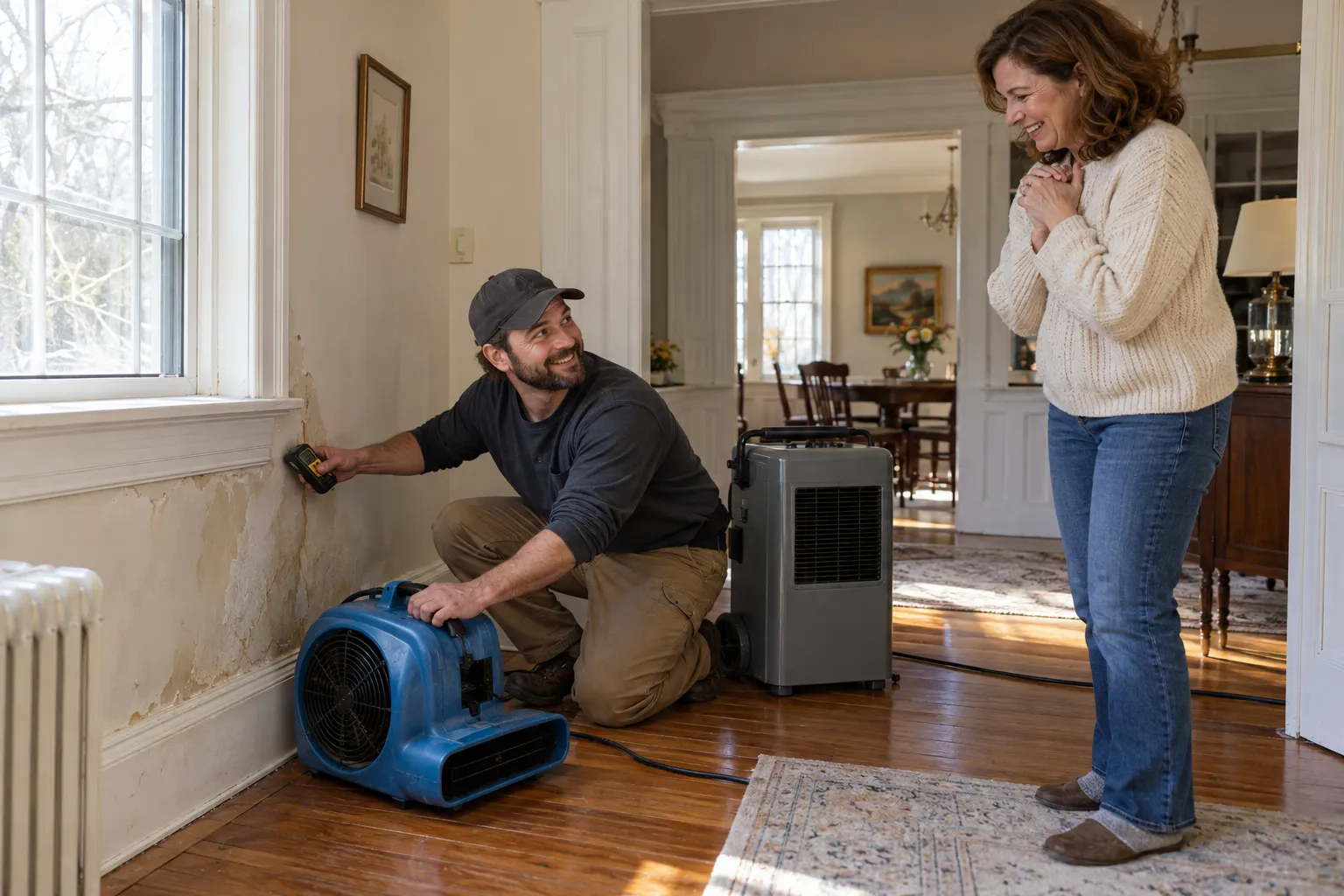
Water extraction means pulling standing water out of your home with pumps and strong vacuums. Structural drying comes next. It dries the parts you cannot see, like wall cavities, subfloors, and framing, so moisture does not stay trapped inside.
Administrativecross Restoration is a referral service. We do not do the work. We connect homeowners in Toms River and the Jersey Shore area with independent local providers who know how winter thaws, spring snowmelt, coastal storms, and older stone and block foundations affect drying. Breathe, then dry. Request an estimate, compare your options, and choose what feels right. There is no obligation to hire anyone.
First, take a breath. Water in your home feels scary, but this is a problem providers handle often. Your job right now is simple: stay safe and make one good call.
If water is near outlets, cords, or a breaker panel, stay out of the room. Turn off power only if you can reach the panel without stepping in water. Otherwise, wait for a licensed electrician or a provider to tell you what to do.
Request a callback to check provider availability in your area. Many providers can respond quickly for emergency water damage repair, but availability changes with the season and the weather.
If you have never dealt with this, the words can be confusing. Here is the plain version.
Water extraction is removing the water you can see. Think of pumps and heavy-duty vacuums pulling water off floors and out of carpet.
Structural drying is drying what is left behind. That means wood, drywall, insulation, and concrete that soaked up moisture.
Water does not stay where it lands. It soaks into wood and drywall and moves along framing. The longer it sits, the more it spreads.
Damp materials can start to grow mold in a few days, especially in warm, humid rooms. Early extraction gives the drying stage a much better starting point and often means fewer parts need to be replaced.
A provider usually starts by finding the source and making sure the water has stopped. Then they remove the water in steps.
This stage can take a few hours for a small leak. A larger flood takes longer.
After the standing water is gone, the home still holds moisture. This is the part many first-timers do not expect.
Providers set up air movers, which are fans that push air across wet surfaces. They also bring in dehumidifiers that pull moisture out of the air. Together they dry floors, walls, and framing.
Some providers drill small holes or lift baseboards so air can reach inside wall cavities. It looks like a lot, but it protects your home.
Dry to the touch is not the same as dry. Providers use moisture meters and sometimes thermal cameras to find damp spots behind surfaces.
They often take readings each day and compare them to a dry reference point. Drying is done when the readings match, not when the room just feels okay.
Most jobs take about three to five days, though it varies. Several things change the timeline:
In cold, snowy winters, ice and thaw cycles can crack pipes and let water in through foundation seams. Cold air also holds little moisture, so drying can be slower unless the provider adds heat and dehumidifiers.
In spring, snowmelt and rain can push water through stone and block foundations. Older homes with full basements are often hit first.
In summer and fall, coastal storms and humid air can leave damp spots that linger. Warm, wet air gives mold an easy start, so careful monitoring matters.
Stone and block foundations can hold water like a sponge. Older plaster, wood framing, and Cape Cod style knee walls have tight spaces where moisture hides.
In multi-family buildings, water can travel through shared walls and ceilings to a neighbor. A provider who knows older housing can plan for these hidden paths.
One step first: keep yourself safe. Then try these simple things if it is safe to do so:
Please do not use a regular household vacuum on water. Do not walk through deep water in the dark.
Some policies may cover sudden damage, such as a burst pipe. Others may not cover flooding from outside. Check your policy or ask your insurer.
Providers can often help document damage for a claim. Your photos and a written record of the drying readings can be helpful.
You do not need to be an expert. A few clear questions help you feel in control.
You do not have to decide everything today. Talk to a provider, ask your questions, and compare a written quote. There is no obligation.
If water is still in your home, Request a callback to check provider availability.
Once the readings are normal, ask the provider what comes next. Some homes need new drywall, flooring, or paint. Others are ready to go back to normal.
Keep an eye on the area for a few weeks. A musty smell or new stains can mean moisture is still hiding.
Providers use pumps and strong vacuums to pull standing water off floors, carpet, and low areas.
Powerful fans push dry air across wet floors and walls to speed drying.
Dehumidifiers pull moisture out of the air so damp materials can dry without growing mold.
Providers use meters to find hidden damp spots in walls, floors, and framing, and track progress each day.
Prices depend on how much water came in, how long it sat, and what your home is made of. These are typical U.S. ranges. Always ask for a written quote.
| Item | Typical range | Notes |
|---|---|---|
| Water extraction, one room | $300 – $1,000 | Depends on depth and flooring type |
| Water extraction, whole floor | $1,000 – $3,500 | Larger jobs need more equipment and time |
| Drying equipment, 3 to 5 days | $500 – $2,500 | Fans and dehumidifiers, often priced per day |
| Moisture checks and monitoring | $100 – $400 | Daily readings to confirm things are dry |
| Wet carpet pad removal | $200 – $800 | Pad often cannot be saved after soaking |
| Wet drywall or insulation removal | $500 – $2,500 | Needed when materials stay wet too long |
Avoid wet areas near electricity, shut off the water source if possible, and keep everyone clear.
Take photos and videos of the water and damaged items for your own records.
Request a callback to check provider availability or request an estimate through the form.
The provider removes standing water, sets up drying equipment, and checks readings until things are dry.
Independent providers in your area understand how snowmelt, storms, and cold shape drying times.
We explain each step in simple words so you know what comes next.
Request an estimate and compare written quotes from independent providers before you decide.
Asking for help does not mean you must hire anyone or commit to anything.
Questions about wet floors, a damp basement, or what to do first? Send a note or ask for an estimate. There is no obligation.
No obligationWater extraction removes the standing water you can see, using pumps and vacuums. Structural drying comes after. It uses fans and dehumidifiers to dry walls, floors, and framing so hidden moisture does not cause mold.
Many jobs take about three to five days, but it varies. Thick wood, concrete, cold weather, and humid air can slow drying. A provider checks moisture readings to know when it is truly dry.
For a very small spill, fans may help. For larger leaks or floods, moisture often hides inside walls and floors. Providers have stronger equipment and meters to find it, which lowers the risk of mold.
Questions about wet floors, a damp basement, or what to do first? Send a note or ask for an estimate. There is no obligation.
No obligation