Need flooded basement cleanup in Toms River?
Questions about wet floors, a damp basement, or what to do first? Send a note or ask for an estimate. There is no obligation.
No obligation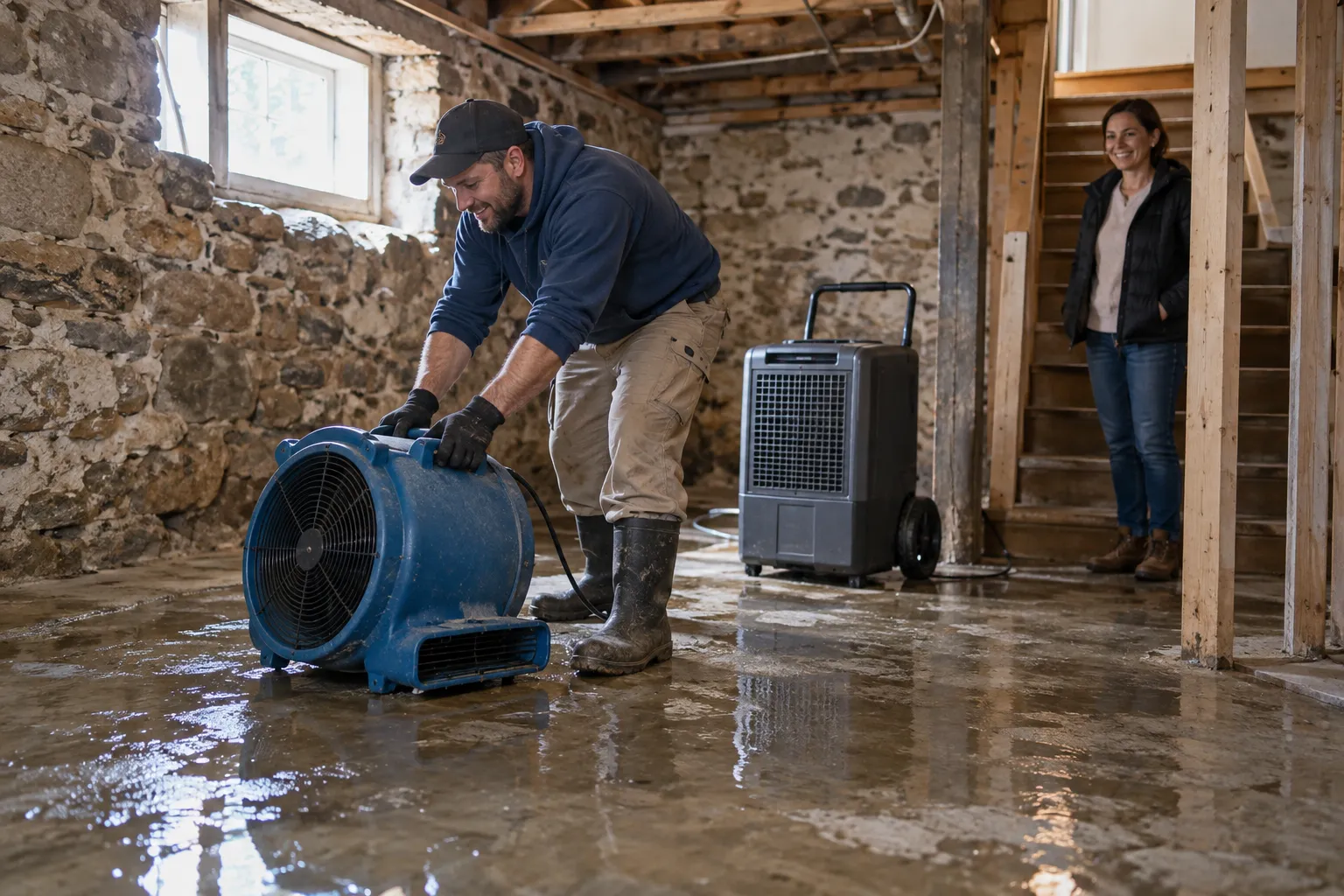
Request a no-obligation estimate
Finding water in your basement is upsetting, especially if you have never faced it before. You may not know who to trust or what to do first. Administrativecross Restoration is a referral service. It connects you with independent local providers in the Jersey Shore area who handle flooded basement cleanup.
The providers in our network know how local weather and older foundations affect a wet basement. Snowmelt, coastal storms, and stone or block walls all change the work. A provider can look at your space, explain what they see in plain words, and give you a written quote. There is no obligation to hire anyone.
You opened the basement door and saw water on the floor. That is a awful moment. Take a slow breath. You do not have to solve everything at once. This page walks you through it in order, from the most urgent step to the last. Administrativecross Restoration can connect you with an independent local provider in the Jersey Shore area when you are ready.
Water and electricity do not mix. Before you head down the stairs, think about these points:
Stuff can be replaced. You cannot. Safety comes before everything else.
The source decides what happens next. A cracked pipe, a failed sump pump, a leaking water heater, a washing machine hose, a backed-up drain, and seepage through a wall all need different fixes. If the source is still running, stop it if you can do so safely. Shut off the main water valve for a pipe break. Take photos before you touch anything. A provider can help find the source if it is not clear.
First-timers often ask why the water type matters. It changes how careful the cleanup must be.
When you are unsure, treat the water as unsafe and do not touch it with bare hands.
Basements are cool, dark, and damp. That is the perfect place for mold to grow. Mold can begin within a couple of days. Wet drywall, carpet, and wood can also warp and smell. The sooner a provider starts, the more you may be able to save.
Many providers can respond quickly, but availability varies. Request a callback to check provider availability in your area.
Weather shapes basement floods here. Knowing the pattern helps you plan.
Cold snaps can split pipes in cold corners of a basement. When ice melts, the water pours out all at once. Frozen ground can also keep rain from soaking in, so it runs toward your foundation.
Spring thaw sends a lot of water into the soil fast. Full basements with stone or block walls may seep at the seams. Repeated freezing and thawing can widen small cracks over the years.
Coastal storms and heavy rain can overload gutters, drains, and sump pumps. A power outage can stop a pump just when you need it most.
Every job is different, but most providers follow a similar path:
A provider should explain each step before the work begins.
An unfinished basement with a concrete floor is often simpler. Water can be removed and the surfaces cleaned and dried. A finished basement has more to protect. Flooring, walls, trim, and insulation can hide wet spots. Providers may need to open a wall to check behind it. That can feel scary, but it helps stop hidden mold.
Older houses often have stone or block foundations. These walls let in more moisture than newer poured walls. Cape Cod style homes and multi-family buildings may have low rooms, tight stairs, and shared utilities. A local provider who knows these homes can plan the work around them.
Sort your things only after it is safe to enter. Move dry items upstairs first. Photograph everything that is damaged. Hard items like plastic bins and metal tools can often be cleaned. Soft items like couches, mattresses, and cardboard are harder to save, especially after black water. Ask the provider what can be dried and what should go.
Some policies may cover sudden damage, but many do not cover slow leaks or groundwater. Check your policy. Providers can often help document damage for a claim. Keep photos, notes, and receipts together in one folder.
Once the basement is dry, take a few steps to lower the chance of a repeat:
If you notice a musty smell weeks later, ask the provider to look again.
It is fine to ask plenty of questions. Good ones include:
You do not have to fix the whole basement today. Pick one step: make it safe, stop the source, or reach out to a provider. Administrativecross Restoration is here to help you take that step, with no obligation.
Pumps and vacuums clear standing water so the floor and walls can start to dry.
Soaked carpet, padding, and damaged drywall are taken out before mold can spread.
Floors, walls, and hard items are cleaned, with extra care when the water was unsafe.
Fans, dehumidifiers, and moisture readings show when your space is truly dry.
Prices change with the water type, the size of the space, and how long it sat. These are typical U.S. ranges only. Always ask for a written quote.
| Item | Typical range | Notes |
|---|---|---|
| Water pump-out and removal | $300 – $1,500 | Depends on depth and basement size |
| Drying equipment and monitoring | $500 – $2,500 | Usually runs for several days |
| Cleaning and sanitizing | $500 – $2,000 | Costs rise with gray or black water |
| Wet drywall and insulation removal | $1,000 – $4,000 | More if walls are finished and need opening |
| Carpet and padding removal | $300 – $1,500 | Varies by room size and flooring type |
| Mold testing | $300 – $1,000 | Only needed if mold is suspected |
Tell us where you are and what happened. A few simple details are enough to begin.
Administrativecross Restoration connects you with an independent local provider who serves your part of the Jersey Shore area.
The provider looks at the space and explains the work, the timing, and the price.
You decide whether to hire the provider. There is no pressure and no obligation.
Providers in our network understand snowmelt, coastal storms, and ground that stays wet for weeks.
Many providers have worked in stone, block, and Cape Cod basements and know their quirks.
You get simple explanations and a written quote, so you know what to expect.
Request an estimate and compare. You choose whether to move forward with any provider.
Questions about wet floors, a damp basement, or what to do first? Send a note or ask for an estimate. There is no obligation.
No obligationStay out if water is near outlets, the furnace, or the panel. Turn off the water source if you can do it safely. Take photos, then reach out to a provider. Do not wade through deep water or touch anything electrical.
Mold can begin within a couple of days in a damp, cool space. Fast drying helps limit it. A provider can check moisture levels and tell you if mold is a concern.
It depends on your policy and the cause. Some policies may cover sudden damage, but many exclude groundwater or slow leaks. Check your policy, and ask a provider to help document the damage for a claim.
Questions about wet floors, a damp basement, or what to do first? Send a note or ask for an estimate. There is no obligation.
No obligation