Need water damage restoration services in Toms River?
Questions about wet floors, a damp basement, or what to do first? Send a note or ask for an estimate. There is no obligation.
No obligation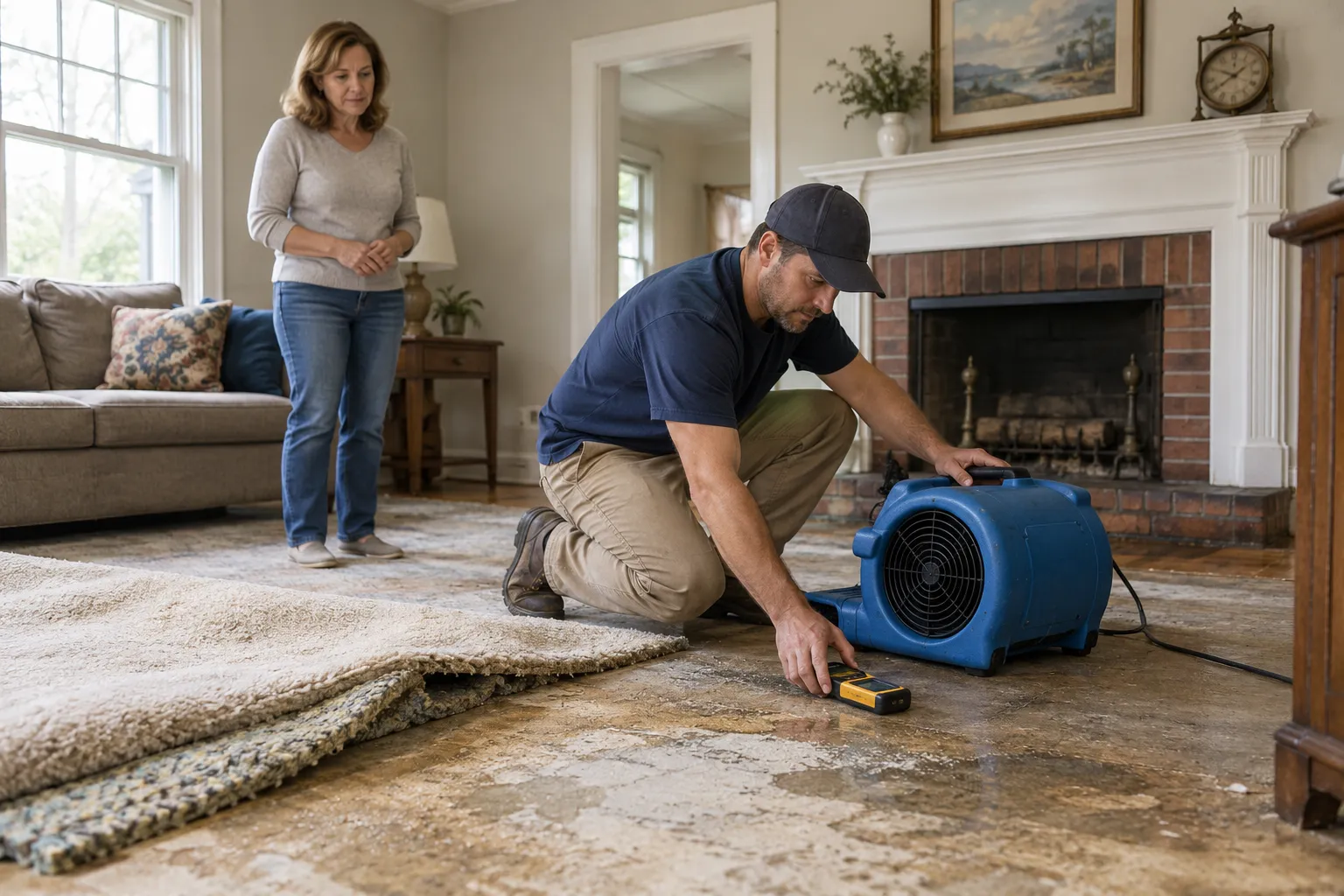
Water damage can come from a burst pipe, a leaking roof, a backed-up drain, or a storm. Whatever the cause, wet walls, floors, and belongings need care soon. Water damage restoration is the full process of drying out the home, cleaning it, and fixing what the water harmed.
Administrativecross Restoration is a referral service. We do not do the work ourselves. We connect homeowners in the Jersey Shore area with independent providers in our network who know local homes, from older basements to wood-framed floors. If this is your first time, that is okay. We explain each step in plain words, so you know what to expect.
A burst pipe. A leaking roof. A drain that backs up. It is upsetting when water shows up where it should not be. That feeling is normal, and you do not have to solve everything today.
Here is one step first: make the space safe. After that, a local provider can start the drying.
Administrativecross Restoration is a referral service. We do not do the cleanup or repairs. We connect you with independent providers in our network, and they do the hands-on work.
Breathe, then dry. But first, look for danger. If you can do it safely, try these steps:
If you smell gas or see sparks, leave the home and contact your local emergency services.
Water does not stay where it lands. It soaks into drywall, wood, carpet padding, and insulation. Wood can swell and warp. Paint can bubble. In a warm, damp space, mold can begin to grow within a couple of days.
That is why many providers can respond quickly when you reach out. Quick action often means less to replace later. Availability depends on the provider and the season, so ask what they can offer.
Season by season, water finds different ways in. Knowing this helps you plan.
Frozen pipes can split, and the damage shows up when things warm up. Heavy snow on a roof can melt and leak through the ceiling. Cold air also slows drying, so providers may use more heat and equipment.
Snowmelt and heavy rain push water against foundations. Basements and crawl spaces take the first hit. Repeated thaw cycles can also open small cracks in old walls.
Coastal storms and sudden downpours can overwhelm drains and gutters. Humid air makes drying harder and helps mold spread. Fall is a good time to check gutters and sump pumps before the cold returns.
Restoration is more than mopping up. A provider in our network may help with several parts of the job:
Not every job needs every step. A small leak may only need drying. A larger loss may need rebuilding too.
First-timers often hear terms like "clean water" and "black water." Here is what they mean.
The type of water changes what can be dried and what must be thrown out. Ask the provider how they judge it.
Many local homes are older. Full basements, stone and block foundations, and Cape Cod style layouts are common. These homes can hold moisture in odd spots, like behind knee walls or under old flooring.
Multi-family buildings add another twist. Water can travel from one unit to the next. A provider who knows these layouts can look in the right places.
Some policies may cover sudden damage, like a burst pipe. Slow leaks and flood water are often treated differently. Check your policy, or ask your agent what applies to you.
Providers can often help document damage for a claim. Keep your photos, receipts, and notes in one folder. Ask for written details of what was done.
Take a breath and ask a few simple questions:
A good provider answers in plain words. If someone rushes you, it is fine to pause and compare.
After drying, the provider checks moisture again. Then comes cleaning and, if needed, repairs. Rebuilding may take longer than drying, especially in cold months when materials and schedules are tight.
Give yourself some patience. A dry, healthy home is the goal.
Ready to take the next step? Request an estimate with no obligation, and see which providers are available near you.
Providers remove standing water and soaked materials so drying can begin before damage spreads further.
Fans and dehumidifiers pull moisture out of walls, floors, and framing.
Affected areas are cleaned and treated to lower germ and odor concerns after a leak or flood.
When needed, providers replace drywall, flooring, and trim so rooms look and feel normal again.
Costs vary a lot by job size, water type, and how long the water sat. These are typical U.S. ranges only. Always ask for a written quote before work begins, so there are no surprises.
| Item | Typical range | Notes |
|---|---|---|
| Small leak, one room | $400 – $1,500 | Often drying and light cleanup only |
| Water removal and drying | $1,000 – $4,000 | Depends on rooms and drying days |
| Large or multi-room loss | $3,000 – $10,000 | More equipment and more materials |
| Sewage or flood water | $3,000 – $8,000 | Extra safety steps and disposal |
| Mold treatment | $500 – $6,000 | Varies by area and access |
| Repairs and rebuild | $1,500 – $15,000 | Drywall, floors, paint, and trim |
Stop the water source if you can, avoid wet electrical areas, and take photos of the damage.
Request a callback to check provider availability, or use the request form to share what happened.
The provider checks the damage and explains the plan, the timeline, and the price in writing.
The provider dries the home, cleans it, and rebuilds what needs replacing.
Providers in our network know how cold winters, spring snowmelt, and coastal storms affect local homes.
We explain terms and steps simply, so first-timers feel less lost.
You can request an estimate and compare options before you decide on anything.
Providers are separate local businesses, and they do all of the hands-on work.
Questions about wet floors, a damp basement, or what to do first? Send a note or ask for an estimate. There is no obligation.
No obligationMake things safe first. Shut off the water source if you can, avoid wet electrical areas, and take photos. Then reach out to a local provider to start drying and ask about next steps.
Drying often takes several days. Cleanup and repairs can add more time. The length depends on how much water got in, what type it was, and the weather.
Some policies may cover sudden damage, like a burst pipe, but not slow leaks or flooding. Check your policy and ask your agent. Providers can often help document damage.
Questions about wet floors, a damp basement, or what to do first? Send a note or ask for an estimate. There is no obligation.
No obligation